Donors mount pressure on Salva Kiir
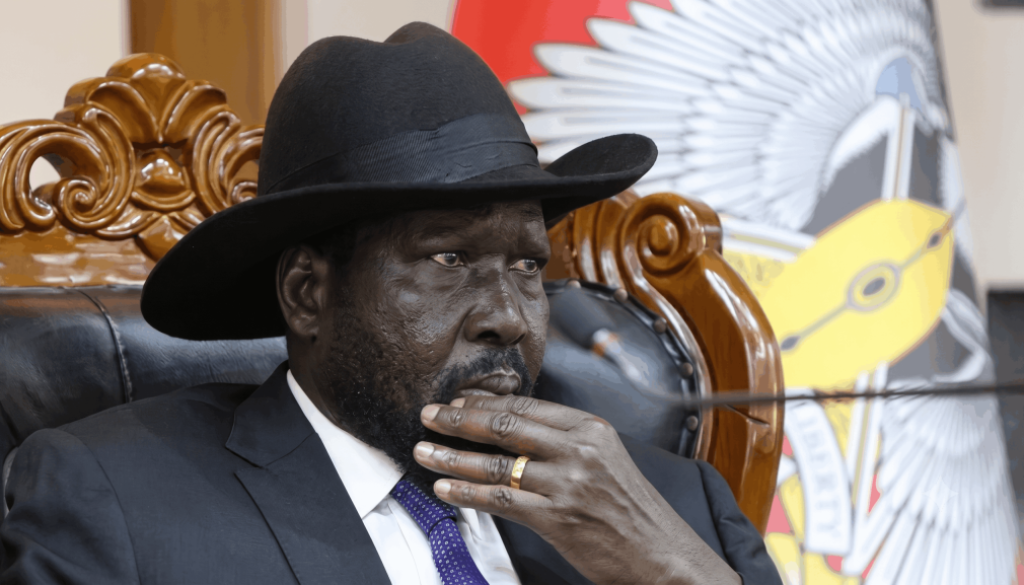
CAPTION: President Salva Kiir at a recent even in Juba. [Photo: Courtesy]
By Our reporter
JUBA – A coalition of 17 Western embassies and the European Union has piled pressure on President Salva Kiir’s government to reverse controversial amendments to South Sudan’s peace agreement and immediately return to dialogue with all signatories, amid escalating tensions within the fragile unity government.
In a joint statement issued on May 19, the diplomatic missions warned that unilateral changes to the 2018 Revitalized Agreement on the Resolution of the Conflict in South Sudan (R-ARCSS) risk undermining the legitimacy of the transitional government and jeopardizing prospects for lasting peace.
“The Peace Agreement remains the basis of legitimacy for the transitional government in South Sudan,” the statement read.
The embassies further stressed that “unilateral changes to the Agreement are not in accordance with the letter and spirit of the Agreement and will not bring peace to South Sudan.”
They called for “an immediate return to dialogue among all parties to the Peace Agreement.”
The statement was jointly issued by the embassies of Australia, Canada, Cyprus, Denmark, Finland, France, Germany, Ireland, Japan, the Netherlands, New Zealand, Norway, Portugal, Slovenia, Sweden, Switzerland, the United Kingdom, the United States, and the Delegation of the European Union.
The diplomatic pressure comes amid growing controversy surrounding proposed amendments to key provisions of the peace agreement spearheaded by the ruling Sudan People’s Liberation Movement-In Government (SPLM-IG), led by Kiir.
The amendments were tabled before the Transitional National Legislative Assembly in April by the Ministry of Justice and Constitutional Affairs, reportedly with support from smaller political parties signatory to the agreement but without participation from the main armed opposition group, the Sudan People’s Liberation Movement in Opposition (SPLM-IO).
The SPLM-IO, led by First Vice President Riek Machar, has rejected the proposed changes, arguing that they violate the consensual framework upon which the revitalized peace deal was founded.
Critics say the amendments could significantly alter the balance of power within the transitional arrangements and further weaken trust between the parties.
The diplomatic warning also comes against the backdrop of mounting international concern over the continued detention of Machar and other political figures allied to the opposition.
Regional and international actors, including the African Union High-Level Ad Hoc Committee for South Sudan, have previously urged Kiir’s administration to release political detainees and recommit to dialogue. The AU committee reportedly adopted a resolution on the sidelines of the February 2026 African Union Summit in Addis Ababa calling for the release of Machar and other detained opposition officials.
However, Juba has so far resisted those calls.
Tensions escalated further on May 15 when Kiir dismissed 47 lawmakers allied to Machar from the Transitional National Legislative Assembly and replaced them with members linked to a rival SPLM-IO faction led by Stephen Par Kuol.
The move was widely viewed by analysts and opposition figures as an attempt to consolidate political control ahead of anticipated decisions on the peace agreement amendments.
South Sudan’s unity government, formed under the 2018 peace deal following years of civil war, has repeatedly faced accusations of delayed implementation, political mistrust, and unilateral decision-making.
While the agreement formally ended large-scale fighting between forces loyal to Kiir and Machar, many critical provisions — including security arrangements, constitution-making, and preparations for elections — remain incomplete.
The latest diplomatic intervention signals increasing international concern that the transitional process may be drifting away from the inclusive political settlement envisioned under the revitalized agreement.