Tanzania turns to Dangote for projects
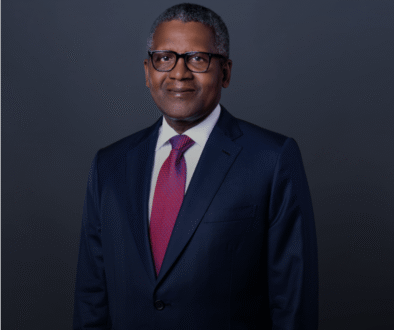
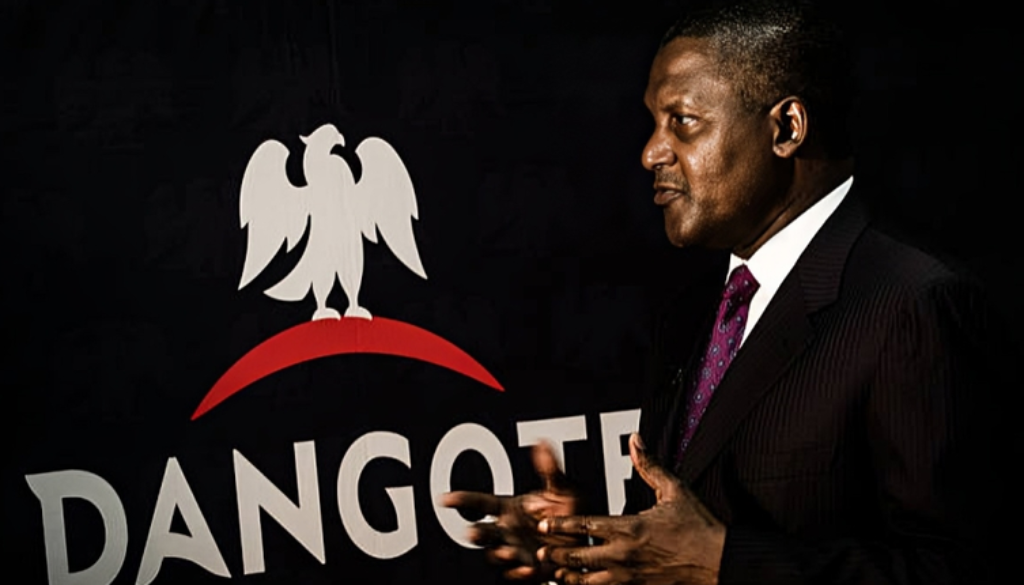
CAPTION: Aliko Dangote, founder of Dangote Industries and Africa’s richest man. His group is pursuing a new wave of industrial investments across East Africa. [Tom Saater/Bloomberg via Getty Images]
By Agency
Tanzania is stepping up efforts to secure major fertiliser, power and infrastructure investments from Africa’s richest man, Aliko Dangote, after neighbouring Kenya was selected for his planned giant East African oil refinery.
- Tanzania has stepped up efforts to secure new investments from Dangote Group in fertiliser, energy and infrastructure.
- A government delegation visited Dangote’s operations in Nigeria to advance projects discussed with President Samia Suluhu Hassan.
- The talks include a proposed 2,000MW power plant, fertiliser production, port infrastructure and transport projects.
- The push comes after Dangote chose neighbouring Kenya for a major 700,000-barrel-a-day refinery intended to serve East Africa.
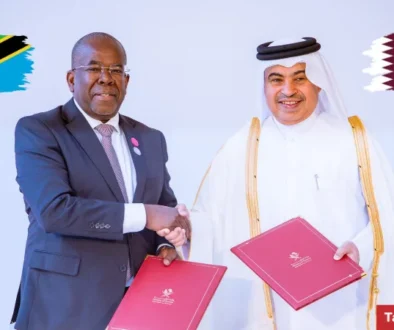
A Tanzanian government delegation recently visited Dangote’s sprawling refinery and petrochemical complex in Lagos to advance investment discussions between President Samia Suluhu Hassan’s government and the Nigerian billionaire’s industrial group.
Tanzania is particularly seeking Dangote investments in fertiliser production and energy, Punch reported, citing Kitila Mkumbo, the country’s Minister of State responsible for Planning and Investment.
The visit moves discussions beyond the high-level talks held between Hassan and Dangote earlier this year and comes as East Africa emerges as an important frontier in the billionaire’s plans to expand his industrial empire beyond Nigeria.
Dangote Group has identified a wide range of potential projects in Tanzania, including a 2,000-megawatt coal-fired power plant, a urea fertiliser plant, port development and a 40-kilometre concrete access road.
Discussions have also covered the development of a special trade zone and transport infrastructure linking Mtwara, on Tanzania’s Indian Ocean coast, with Mbamba Bay on Lake Malawi.
No final investment values or construction timelines have been announced for the project
Tanzanian President Samia Suluhu Hassan. Her government is seeking new Dangote investments spanning fertiliser, power, ports and transport infrastructure.
Tanzania looks beyond the refinery
The renewed push comes after Tanzania missed out on another potentially transformative Dangote investment, his planned East African oil refinery.
Dangote had initially considered Tanzania as a possible location for the project, amid discussions by East African governments over a regional refinery at the port of Tanga.
In April, Kenyan President William Ruto said Kenya, Tanzania and other countries in the region were discussing a joint refinery at Tanga that could process crude from countries including Uganda, South Sudan and the Democratic Republic of Congo.
Dangote had offered to develop the facility, drawing on his experience building his 650,000-barrel-a-day refinery in Lagos.
But the billionaire subsequently shifted towards Kenya.
Dangote Industries said in June that commercial and technical considerations had informed its decision to locate the planned refinery in Lamu, while inviting Tanzania to participate in the investment.
The project has since grown in scale. The proposed Lamu refinery is expected to process about 700,000 barrels of crude per day and could take up to three years to build.
Dangote Group plans to finance the project through a combination of internally generated cash, bonds and proceeds from the planned listing of its Nigerian refinery.
The Kenyan project would give Dangote a major foothold in a region that currently depends heavily on imported refined petroleum products, while extending the industrialist’s growing influence over Africa’s energy supply chain.
A wider East African expansion
For Tanzania, however, losing the refinery does not mean losing Dangote.The government is instead positioning itself to attract other parts of the conglomerate’s expansion into energy, agriculture and infrastructure.
Dangote already has a major presence in the country through its cement operations in Mtwara, making Tanzania one of the group’s established markets outside Nigeria.
Fertiliser could become an increasingly important part of that relationship.
In May, Tanzania’s Fertiliser Regulatory Authority said Dangote Group had expressed interest in expanding into fertiliser production following talks with Hassan.
The Tanzanian government sees domestic fertiliser production as part of a broader effort to raise agricultural productivity, reduce dependence on imports and position the country as a production hub serving the wider East African market.
Dangote, meanwhile, has ambitions of his own. The billionaire said in April that his group planned to establish about 20 fertiliser blending plants across Africa by 2028 as it expands beyond its existing industrial operations.
That strategy is increasingly taking on a pan-African dimension.Dangote’s Nigerian refinery, which began production in 2024 after an investment exceeding $20 billion, has reshaped petroleum trade flows between Africa and international markets.
The group is now preparing to list the refinery in Nigeria in October, with plans to raise about $5 billion in what could become Africa’s largest-ever stock market listing.
Part of the capital is expected to support the group’s expansion, including the proposed Kenyan refinery.
Dangote has also sought to broaden African participation in his businesses, while stock exchanges including those in South Africa and Kenya have expressed interest in providing investors with exposure to the refinery.
The latest Tanzanian delegation therefore reflects a broader competition among African governments for a share of Dangote’s next investment cycle.
Kenya has secured the proposed refinery. Tanzania is now seeking to translate its longstanding relationship with the conglomerate into investments spanning fertiliser, electricity, ports and transport infrastructure.
For Dar es Salaam, the potential prize extends beyond attracting another Nigerian investor.
If the proposed projects move from discussions to construction, Tanzania could become an important second pillar of Dangote’s East African expansion, focused less on refining crude and more on supplying the power, agricultural inputs and infrastructure needed to support the region’s industrial growth.