Calls for reforms in Kenya’ food system
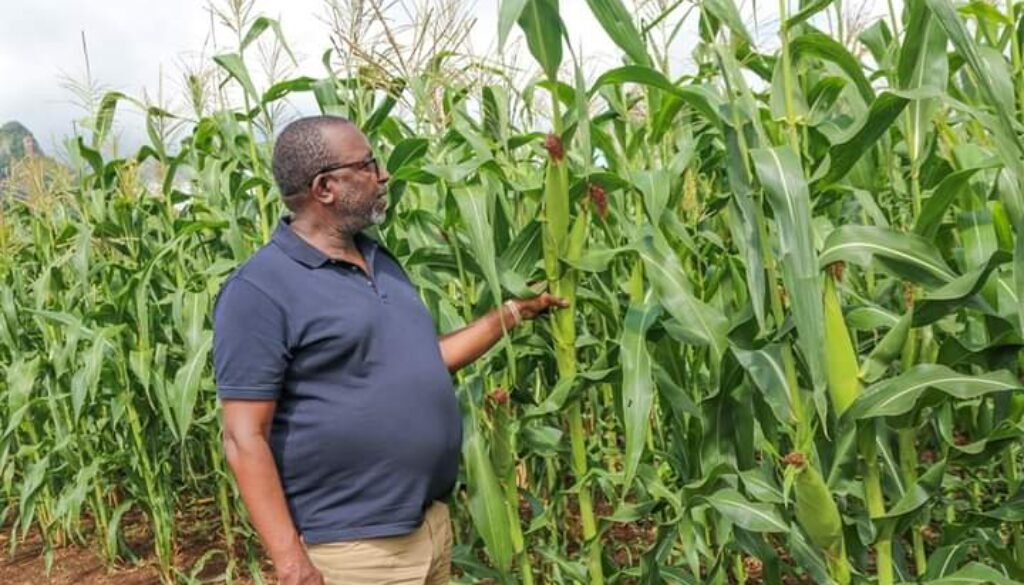
CAPTION: A Kenyan farmer in his maize garden in Kisumu Market recently. (File photo).
By Gilber Koech
NAIROBI – Experts have called for radical reforms in Kenya’s food system to build a more sustainable, inclusive and resilient structure.
Food systems expert Nancy Rapando said Kenya’s food systems face unprecedented challenges that require a holistic and integrated approach.
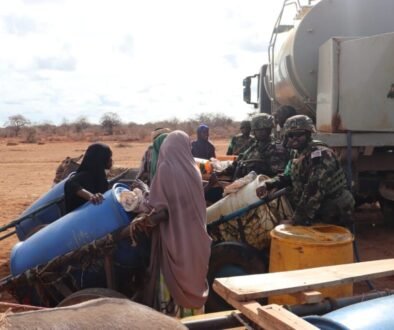
“We have had a big drought and everyone is worried. That draws you to know that our food systems are not resilient, because that is just a seasonal shock. The food baskets have no food and it doesn’t mean that cassava never survived,” she said.
A food system encompasses the entire range of actors and their interlinked value-adding activities involved in the production, aggregation, processing, distribution, consumption and disposal of food products.
These food products originate from agriculture, forestry or fisheries and form part of the broader economic, societal and natural environments in which they are embedded.
Rapando said current investments are not based on diversified systems.
“Kenya’s big budget on agriculture goes into subsidies, and when we are talking about subsidies, we are talking about fertilisers. The farms that received fertilisers actually performed even more poorly because the crops were destroyed,” she said.
Kenya’s agricultural sector is crucial for the economy, contributing 22.4 per cent of the country’s Gross Domestic Product (GDP).
The sector employs more than 60 per cent of the population in formal and informal sectors.
Agriculture is also essential for food and nutrition security, with more than 80 per cent of Kenyans deriving their livelihoods directly or indirectly from it.
However, food production in the country is not keeping pace with population growth, necessitating imports to bridge the deficit.
The Food and Agriculture Organisation (FAO) states that food security exists when all people, at all times, have physical and economic access to sufficient, safe and nutritious food that meets their dietary needs and food preferences for an active and healthy life.
Rapando stresses the need to adopt new practices such as agroecology to improve soil health.
“As a country, the shift in food systems is not just about increasing budgets on what we are spending on food, but the quality and type of interventions. We are really trying to see how Kenya can become a hub for the increased production of biological inputs,” she said.
She added that organic fertilisers can help restore soil health.
Rapando said the Nairobi Declaration is clear on how to improve soil health through the combined incorporation of organic and inorganic inputs.
She said there is also an urgent need to re-examine the land tenure system, adding that women and young people have vital roles to play but are held back by lack of land ownership.
According to Rapando, indigenous seeds have a great role to play in enhancing the country’s food system, as they are resilient and require fewer inputs like commercial fertilisers.
She further stressed the need to cut food loss, which currently stands at about 40 per cent of total production in the country.
Kenya loses up to 40 per cent of its annual food production — translating to roughly nine million tonnes of food valued at around Sh72 billion ($578 million) every year.
Half of these losses occur at the post-harvest and processing stages.
Kilimo Trust Kenya country director Anthony Mugambi echoed Rapando’s sentiments, saying the country’s food systems are severely disrupted by climate shocks such as persistent droughts and floods.
Mugambi, an agricultural value chain development specialist, pointed out there is low adoption of improved technologies like high-yielding seed varieties.
He said Kenya, like many other African nations, remains heavily dependent on rain-fed agriculture.
Mugambi said adopting modern technology will help curb post-harvest losses.
He said Kenya’s initiative to roll out roughly 100,000 kilometres of fibre-optic cable will improve internet access nationwide.
This digital expansion, Mugambi said, will help farmers access critical real-time weather and market information.
He emphasised the need to ease the burden on small-scale farmers, who contribute to producing 30 per cent of the world’s food.
Mugambi decried the fact that less than two per cent of global climate financing reaches farmers.
He called for structured funding mechanisms to ensure climate finance directly benefits smallholders.
Mugambi urged a departure from traditional lending practices that require collateral like land title deeds before issuing loans.
“You can actually use the collective of the farmers to fund them as a group, where what you need as collateral is their aggregation capacity and their previous records of either purchasing inputs or aggregating outputs — that is, the food they sell to a guaranteed buyer.”
Mugambi said adopting regenerative agriculture will reduce production costs while preserving soil health over the long term.
He also advocated for smart agriculture technologies, including the use of drones, to modernise farming operations.