Pope Leo XIV makes an appeal for Somalia
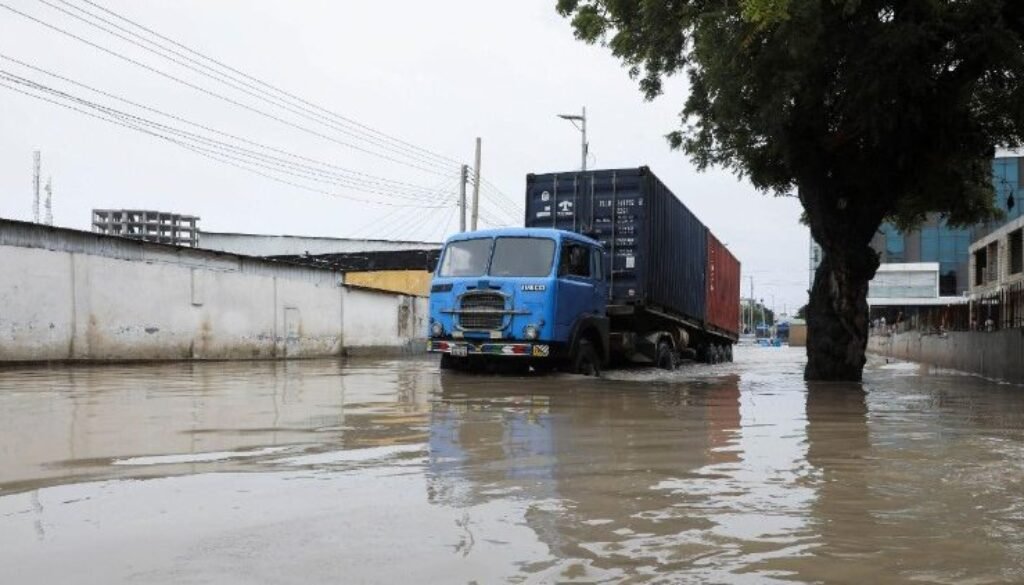
CAPTION: A truck carrying shipping containers drives through flood water in MogadishuA truck carrying shipping containers drives through flood water in Mogadishu. (File Photo).
By Devin Watkins
VATICAN: As he prayed the Angelus on Sunday September 20th, 2026 in St. Peter’s Square, Pope Leo XIV recalled the humanitarian situation in Somalia.
“I am following with great concern the humanitarian crisis unfolding in parts of Somalia, where episodes of violence and extreme weather events are worsening the already precarious living conditions of the population, particularly women and children,” he said.
The Pope expressed his hopes for a “generous response from the international community, so that these brothers and sisters of ours may receive the assistance they need.”
Various United Nations agencies have drastically reduced their humanitarian aid for the African country in recent months. The Office for the Coordination of Humanitarian Affairs (OCHA) said only a third of its already-reduced budget had been funded.
The UN World Food Programme has also reduced food aid, dropping from 2 million people assisted to only 600,000 in 2026.
Rainfall in 2026 has been significantly below average throughout the region, with many families moving their herds in search of water.
Doctors Without Borders (MSF) has called on donors to help it restore and expand primary healthcare malnutrition services in the Mudug region, where over 70 health facilities have been closed.
Somalia has endured internal conflict since the fall of Mohamed Siad Barre in 1991, and Islamist extremists have strengthened their control of the countryside.
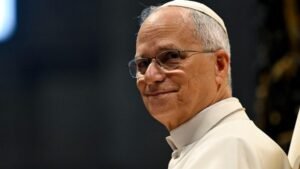
Pope Leo XIV
Meanwhile, Somalia’s key authorities are engaging in soul-searching on the future of their security apparatus, even as they remained defiant that the country won’t collapse once African troops depart.
This month, top officials held the National Internal Security Conference in Mogadishu on September 1–2, to discuss transitioning full domestic security responsibilities to Somalia forces.
They admitted challenges, such as the financial muscle needed to remedy the personnel gap to be left when the African Union Support and Stabilisation Mission in Somalia (Aussom) starts to leave at the end of 2026.
Somalia’s Defence Minister Ahmed Moalim Fiqi said his country is ready to take on a Somali-led framework that is accountable, efficiently managed and financially sustainable.
Part of the programme, he said, is speeding up recruitment and training of troops and providing sufficient equipment.“In Central Somalia, Somali President Hassan Sheikh Mohamud attended the graduation of thousands who completed military training in Galgadud region,” Fiqi said in his conference opening speech on Tuesday.“In Mogadishu, hundreds gain defence skills as they go through training to boost skills and capacity,” he added, mentioning Haramcad police unit cadets training at General Kahiye Academy in Mogadishu.
This conference, organised by the Ministry of Internal Security, brought together officials from the Federal Government of Somalia, Federal Member States, the Somali Police Force, the National Security Agency and international stakeholders.
They highlighted the need for better cooperation between the federal government and federal member states as well as securing predictable, long-term domestic financing and oversight for national security frameworks.
Cooperation has been a sticking point between the federal government and federal member states. Even at this conference, the cracks were visible. Puntland and Jubaland did not send representatives while Southwest was represented by officials of an interim government that came into office after the holder was ousted.
Yet the driving earnestness behind the conference being two folded: to respond to the intended withdrawal of the AU peacekeepers after nearly two decades in Somalia and the blunt warning echoed by prominent opposition leaders and security analysts regarding the country overwhelmed by an ‘Afghanistan scenario.’“No way can we experience an ‘Afghanistan scenario’ as dimly suggested by some,” Fiqi argued in his speech on Tuesday, ruling out Taliban-type takeover of Mogadishu by the Al-Qaeda linked Al-Shabaab. He was referring to the Taliban takeover of Afghanistan after two decades of US and allied troop presence in the Asian country, in 2021.
Minister of Internal Security Abdullahi Sheikh Ismail, better known as Fartaag led sideline meetings with regional security ministers from Southwest, Galmudug, Hirshabelle, and Northeast State, the states which sent representatives to the conference.
Mr Ismail remarked: “The conference supports Somalia’s goalmouth to take full duty for national security,” underlining that focus is on institutional oversight, seamless multi-agency coordination, and predictable domestic funding.” Aussom is likely to exit from December following the decision by the United States in July to cut financial support to The United Nations Support Office in Somalia-the agency that mainly aides the logistics of the peacekeepers in Somalia.
Unlike other officials, Aweys Haji Yusuf, Somalia’s national security adviser, told the audience that the African Union Mission in Somalia will not leave the country snappishly, adding any troop draw-down will be based on a planned transfer of security responsibilities to Somali authorities.“Aussom will not exit the country,” Mr Yusuf said, stressing that the withdrawal of AU troops will depend on the Somali government’s readiness to take over national security responsibilities.
Yusuf said Somalia’s security progress has always been in phases which he argued Mogadishu was ready for the next step. “It began in 2022 after a joint assessment by the Somali government and the United Nations on the government’s ability to assume responsibilities handled by international missions and agencies,” Yusuf said.
He said the assessment concluded that Somalia should gradually take over various responsibilities, with priority given to political affairs, law and justice before the full closure of the UN special mission. “The transition will depend on progress in the fight against Al-Shabaab and the capacity-building of Somali security forces. “Additionally, Yusuf said that the UN Security Council approved a plan in 2025 for Somalia to officially assume the responsibilities of the United Nations Transitional Assistance Mission in Somalia (UNTMIS), by 31st of October 2026. “If Somali forces are strengthened and operations against Al-Shabaab advance, Somalia could assume greater security responsibility sooner than currently planned. “The advisor stated that the Somalia’s plan is not limited to security alone, but also associates security, justice and economic development, describing them as the basis for lasting stability in Somalia. “Once the country wholly assumes responsibilities currently handled by UN special missions, its relationship with the world body would resemble the UN’s relationship with other countries, such as Kenya, rather than one based on special missions and representatives,” Yusuf remarked.
Yusuf’s point is in line with African leaders meeting in Kampala Uganda in July. They urged the United Nations Security Council to extend the African Union Support and Stabilisation Mission in Somalia (AUSSOM) for an additional 18 to 24 months.