PAU marks US$2.2 billion in local oil contracts

Uganda Petroleum Institute Kigumba student under taking oil and gas training recently.
By Our reporter
KAMPALA – The Petroleum Authority of Uganda (PAU) has released a ten-year performance scorecard showing that of the US$7 billion in contracts approved to date, more than US$2.2 billion has been awarded to Ugandan companies one of the clearest indicators yet of rising national participation in the country’s emerging petroleum industry.
The review, released ahead of Uganda’s planned start of commercial oil production in 2026, comes as government pushes an ambitious ten-fold growth strategy intended to anchor wider national development targets. Sector analysts say the report underscores both the progress made and the significant regulatory and operational hurdles that remain as Uganda prepares to join Africa’s oil-producing economies.
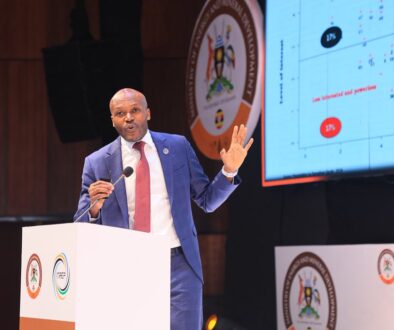
Established in 2015, PAU is mandated to regulate the exploration, development, production, and utilisation of Uganda’s petroleum resources. Speaking at a press briefing in Entebbe on Nov. 19, Executive Director Ernest Rubondo said the Authority’s achievements have been driven by institutional expansion and stronger coordination with local and international partners.
Rubondo noted that PAU has grown from a single staff member in 2016 to 220 specialists today, with an average age of 40 an indication, he said, of deliberate investment in youth-led technical capacity.
Over the past decade, PAU has implemented three strategic plans aligned to National Development Plans II, III, and IV, and developed more than 48 regulatory manuals and guidelines to strengthen operational compliance across the sector.
Regulation and resource oversight
PAU’s regulatory regime has focused on striking a balance between protecting national interests and maintaining investor confidence. For nine consecutive years, the Authority has produced the Annual Petroleum Resources Report, documenting shifts in reserves and production forecasts. Uganda’s oil in place has grown from 6.5 billion barrels to 6.65 billion barrels, while recoverable reserves have risen from 1.4 to 1.65 billion barrels—gains attributed to improved data quality and enhanced mapping of the Albertine Graben.
The Final Investment Decision (FID) in 2022 catalysed a surge in engineering and construction across the oil region. The combined investment value of the Kingfisher, Tilenga, and East African Crude Oil Pipeline (EACOP) projects now exceeds US$15 billion. Progress stands at 74% for Kingfisher, 60% for Tilenga, and 75% for EACOP.
All 19 Kingfisher wells have been drilled, alongside 164 of the 170 wells required for Tilenga. For EACOP, all 1,443km of pipeline were delivered to Tanzania in 2025 and distributed to designated sites. Nearly 1,000km of pipes have been welded, 200km tested and buried, and 150km already laid within Uganda.
Technical milestones include approval of Front-End Engineering Designs, drilling programmes, reservoir reports, and environmental and social documentation. The Uganda Refinery project also advanced with the signing of the Implementation Agreement in March 2025.
PAU is also developing a Real Time Monitoring Centre and a Disaster Recovery Solution to support live oversight of drilling, production, and crude transportation operations. These will complement the National Petroleum Data Repository, which holds more than 60 terabytes of seismic and geoscientific data.
Investment in Uganda’s oil sector reached US$11.11 billion by June 2025, with an additional US$4 billion expected between 2025 and 2027. PAU’s economic modelling tools have helped maintain project profitability at approximately US$30 per barrel.
Environmental and social safeguards
Uganda’s regulatory framework for petroleum waste management, oil spill response, and land acquisition continues to be cited as a continental benchmark. All projects underwent rigorous Environmental and Social Impact Assessments, despite sustained criticism from external groups.
Rubondo said the projects now rank among the world’s least carbon-intensive and most technologically advanced, with commitments for a net gain in biodiversity.
More than 475 modern houses have been built for Project Affected Persons, and nearly 20,000 households have benefited from livelihood restoration programmes, vocational training, and improved social services such as schools, health centres, and water systems. Analysts say the Albertine region’s socioeconomic landscape is markedly different from a decade ago.
National participation remains one of PAU’s most significant achievements. Rubondo said over US$2.2 billion of the US$7 billion in approved contracts has gone to Ugandan companies. About 20,000 Ugandans are directly employed in the sector, while more than 180,000 are engaged indirectly. Ugandans now hold 64% of management roles, 85% of technical positions, and 99% of support roles.
Digital platforms such as the National Suppliers Database and the National Oil and Gas Talent Register are strengthening transparency and talent visibility. More than 3,000 SMEs have received business development support, 14,000 Ugandans trained in specialised skills, and over 40 joint ventures formed. Universities have also received software, hardware, and tools to improve petroleum training.
PAU has additionally worked with multiple sectors—including tourism, agriculture, health, education, and transport—to maximise linkages. Joint studies with private-sector partners estimate Uganda could generate up to US$8 billion in additional GDP from optimally leveraging these linkages even before First Oil.
Cooperation and outlook
The Authority collaborates with regional and international bodies, including the International Upstream Forum and energy regulators across East Africa and beyond. Locally, it works closely with URA, NEMA, UWA, and other MDAs. Annual civil society dialogues, media field tours, and community engagements remain part of its transparency strategy.
Looking ahead, Rubondo said PAU’s mandate will widen significantly once production begins in 2026. The Authority will oversee production, refining, transportation, downstream activities, and continued exploration under the new National Petroleum Policy. The enhanced National Petroleum Data Repository and emerging AI tools are expected to strengthen regulatory precision.
“The Authority remains committed to ensuring that Uganda’s petroleum resources are utilised sustainably and for the benefit of all Ugandans,” Rubondo said.