Rwanda women stumble to Ethiopia

The result leaves coach André Cassa Mbungo’s side needing a positive result in the return leg in Addis Ababa on October 13 to keep their Los Angeles 2028 Olympic dream alive.
The match began at a lively pace, with both teams showing attacking intent, although clear-cut chances were limited as neither side managed to find the necessary accuracy in the final third.
Rwanda struggled to establish control in midfield, prompting Mbungo to make an early tactical change in the 35th minute, bringing on Mireille Uwase for Marie Claire Dukuzumuremyi.
Ethiopia were also forced into a change, moments later when goalkeeper Balcha Tarikua was substituted after sustaining an injury in a collision with a Rwandan player. Jula Betelhem came on in her place.

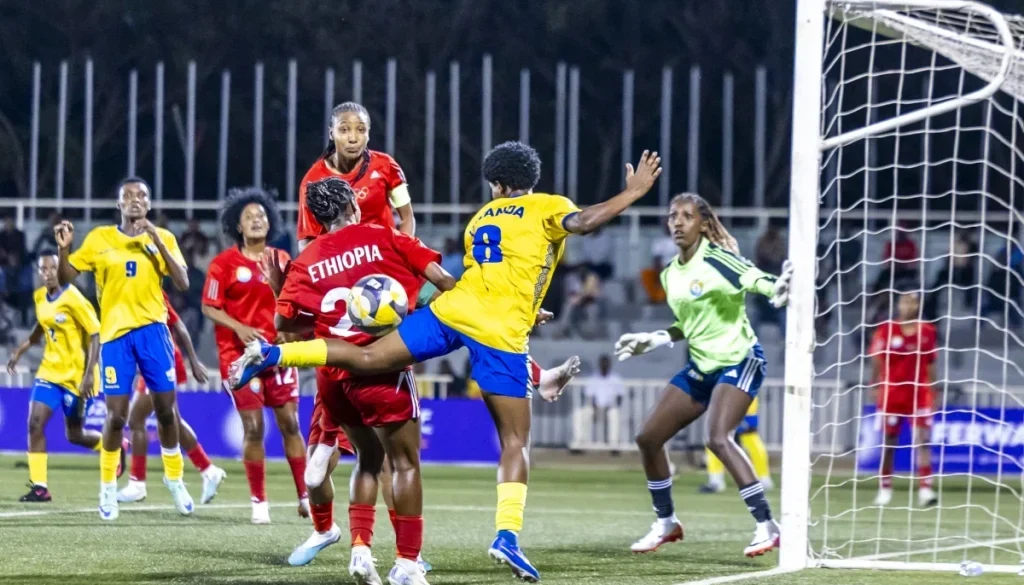
Just when it appeared the teams would go into halftime level, Ethiopia broke the deadlock deep into first-half stoppage time.
Abebe Mihiret sent a dangerous cross into the Rwandan penalty area, where defender Lydia Uzayisenga inadvertently turned the ball into her own net to give the visitors a crucial lead.
Determined to find a way back into the game, Rwanda made two attacking changes at the start of the second half, introducing Laurence Abimana and Joselyne Mukantaganira in search of an equaliser.
The changes injected more energy into Rwanda’s attack, but Ethiopia remained the more dangerous side on the counter.

Denise Senaf and Mesay Tanga repeatedly caused problems for the Rwandan defence, keeping Immacullée Uwimbabazi, Andersène Uwase and goalkeeper Angeline Ndakimana busy.
Ethiopia came close to doubling their lead in the 77th minute when substitute Emush Dandamo unleashed a powerful effort from outside the box that narrowly cleared the crossbar.
Dandamo was involved again a minute later, rising to meet a cross from Tadesse Aregash, but her header drifted wide.
Rwanda continued to push for an equaliser and introduced Florentine Mutuyemariya and Grace Uwingeneye in the closing stages.
However, the hosts struggled to break down Ethiopia’s disciplined defence and could not find the decisive touch before the final whistle.
The defeat exposed some of Rwanda’s weaknesses, particularly in midfield, where Ethiopia enjoyed greater control for long periods.
Rwanda struggled to retain possession and create clear opportunities in the attacking third, leaving their forwards isolated for much of the match.
Although Uzayisenga’s own goal ultimately decided the contest, Ethiopia arguably created the better chances and could have left Kigali with a more comfortable advantage.
Rwanda’s defence showed resilience under sustained pressure, but the team lacked creativity and composure in the final third.
The second leg in Addis Ababa is now effectively a must-win encounter for Rwanda. Mbungo’s side will need a significantly improved attacking performance to overturn the deficit and keep their Olympic hopes alive against a confident Ethiopian team on home soil.
The winner of the tie will advance to the third qualifying round, where either Tanzania or Botswana awaits in February and March 2027.