Court overturns Global Capital Save case
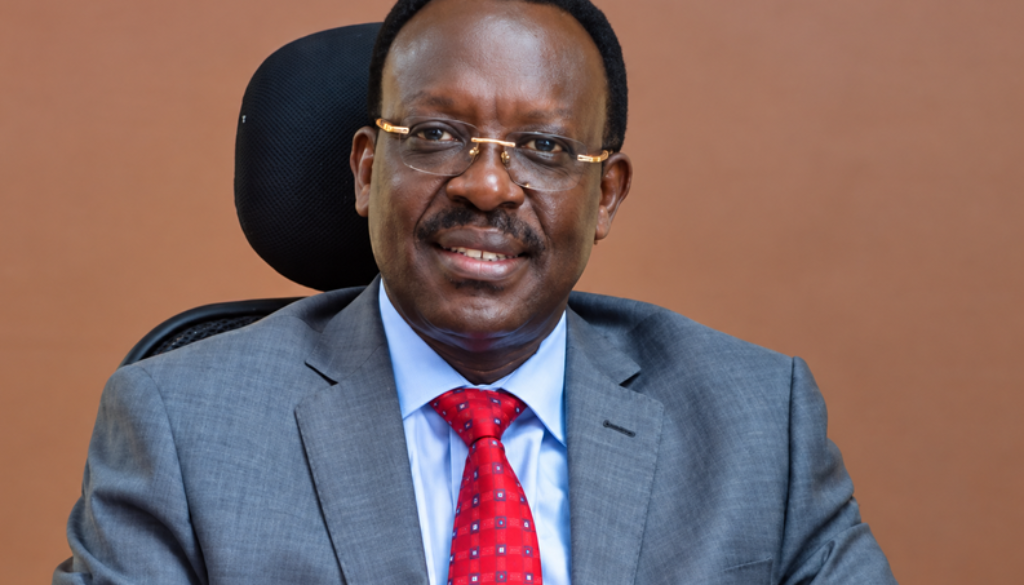
CAPTION: Global Capital Save, Managing Director, Ben Kavuya in a recent photo.
By Our reporter
KAMPALA – The Supreme Court has dismissed an appeal by money-lending company Global Capital Save (2004) Ltd, upholding findings that its mortgage transaction with borrower Alice Okiror was invalid and ordering the company to pay hundreds of millions of shillings in damages.
The five-member Supreme Court, in a judgment delivered in Kampala on September 22, 2026, rejected the lender’s challenge against earlier decisions of the High Court and Court of Appeal over a disputed loan and mortgage transaction.
The Court ordered Global Capital Save and its Managing Director, Ben Kavuya, to pay Shs792 million in special damages, together with interest at the court rate from the date Alice Okiror filed the original High Court case until full payment.
The Court also upheld an award of Shs30 million in general damages, with interest from the date of the High Court judgment, and ordered the immediate return of Okiror’s certificate of title for land comprised in Kyadondo Block 253 Plot 863 at Lukuli.
The appeal was dismissed, with the Supreme Court also awarding costs of the appeal and proceedings in the lower courts to the respondents.
The case arose from a loan transaction in which Okiror and her late husband said they borrowed a total of Shs53 million from Global Capital Save.
The lender disputed this account, claiming it had advanced Shs350 million, of which only Shs230 million had been repaid, leaving an alleged balance of Shs120 million.
The dispute escalated after the borrowers sought the return of their land titles but the lender allegedly declined, citing an outstanding balance.
The original trial court found that the actual loan advanced was Shs53 million and that the lender had charged interest at 12% per month — equivalent to 144% per annum.
The trial court described the interest as illegal, harsh and unconscionable and substituted a rate of 25% per annum. The Court of Appeal subsequently reduced the applicable rate used in calculating the award to 20%.
The Supreme Court found serious defects in the mortgage instrument relied upon by Global Capital Save.
Although the document was headed “Legal Mortgage,” the Court agreed with the lower courts that its contents also contained features of a loan agreement.
Crucially, the document was not sealed by Global Capital Save, a limited liability company, and there was no evidence showing that Kavuya had been properly authorised to execute the mortgage on behalf of the company.
The Supreme Court held that where registered land is involved, the requirements of the Registration of Titles Act must be complied with and that the lender had failed to establish the corporate authority behind Kavuya’s signature.
The Court further held that there was no company resolution, provision in the company’s articles of association or other evidence demonstrating that Kavuya had been authorised to execute the mortgage on behalf of Global Capital Save.
The mortgage also ran into trouble over its purported attestation.
The document bore the signature and stamp of a person identified as Agaba Kakoni Michael as the attesting witness.
However, Okiror testified that she did not know or see Agaba when she signed the document and said that only Kavuya and an accountant were present.
The Supreme Court held that an attesting witness must be present to verify and witness the signing of an instrument. Once Okiror challenged the attestation, the burden shifted to the lender to rebut her evidence.
The lender failed to produce Agaba to prove that he had actually witnessed the execution.
The Court therefore upheld the finding that the mortgage was not properly attested and was consequently invalid.
The Supreme Court also upheld the finding that the mortgaged property was family land and that the required written spousal consent had not been obtained.
The Court said the requirement for spousal consent under the Land Act was mandatory and that the absence of such consent rendered the mortgage void.
The judgment states that spousal consent goes “to the root of a mortgage” and that failure to obtain it renders the mortgage void.
The Supreme Court rejected the lender’s grounds of appeal and maintained the central findings of the lower courts.
The decision was not entirely unanimous on every issue. Four Justices supported the Shs792 million special-damages award, while Justice Bamugemereire dissented on that particular award. Justice Mugenyi also dissented from the majority decision on one of the grounds concerning execution of the mortgage.
Nevertheless, the appeal itself was dismissed.
The final orders require Global Capital Save and the other appellant to pay the special and general damages, return the Lukuli land title immediately and meet the respondents’ legal costs.
The ruling brings to an end a dispute that began with a loan transaction in 2008 and passed through the High Court and Court of Appeal before reaching Uganda’s highest court.
The Supreme Court’s message is clear: a mortgage over registered land cannot be enforced merely because a document exists or has been registered; the underlying instrument must satisfy the statutory requirements governing execution, attestation and, where applicable, spousal consent.