Kenya backs vote allowing Mahmoud Abbas’ virtual General Assembly address
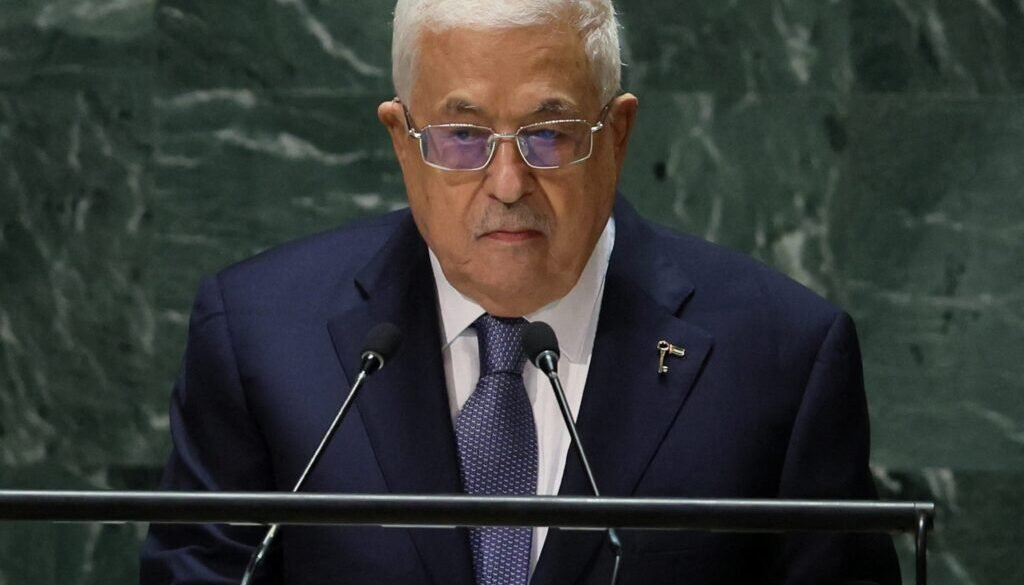
CAPTION: Palestinian President Mahmoud Abbas speaks at the UN headquarters in New York, on September 23, 2022. (Photo: Xinhua)
Friday, September 18, 2026
By Mwangi Maina
The procedural vote passed overwhelmingly with 152 votes, ensuring Mahmoud Abbas can participate despite his inability to travel to New York. Only the United States, Israel, and Paraguay voted against. Four others abstained.
Kenya voted in favour of a UN General Assembly (UNGA) resolution on Thursday that will allow Palestinian President Mahmoud Abbas to address next week’s high-level meeting via video link.
The procedural vote passed overwhelmingly with 152 votes, ensuring Mahmoud can participate despite his inability to travel to New York. Only the United States, Israel, and Paraguay voted against. Four others abstained.
The resolution is modest in scope. It does not recognise Palestine as a state, nor does it confer any new status. But in the symbolic world of UN diplomacy, the vote carries weight. It is the second time Mahmoud has addressed the Assembly via video, having done so last year after being refused a US visa.
Palestine remains an observer state at the UN, not a full member, but the Assembly’s willingness to accommodate its president reflects a broader frustration with Washington’s control over who gets to speak.
That frustration is sharpened by the optics of the past week. The United States, which refused Mahmoud a visa, has granted visas to Iran’s President Masoud Pezeshkian and Foreign Minister Abbas Araghchi to attend the high-level session even though Washington and Tehran have been at war for seven months. The contradiction is not lost on other delegations. Why, they ask, is an Iranian president welcome in New York while a Palestinian one is not?
What is UNGA week?
The UN General Assembly’s high-level week, which begins next week in New York, is the world’s largest annual gathering of heads of state and government. Dozens of presidents, prime ministers, and foreign ministers descend on the city to deliver speeches, hold bilateral meetings, and conduct the quiet diplomacy that rarely makes headlines.
But the week is not just about speeches. It is when decisions are made on the UN’s most sensitive dossiers: peacekeeping mandates, humanitarian appeals, Security Council reform, and the selection of the next Secretary-General. For regional powers like Kenya, UNGA week is an opportunity to be seen, to be heard, and to leverage access for national interests.
This year’s session is particularly consequential. Three major processes converge: implementation of UN reforms, selection of the next Secretary-General, and a high-level review of the global financial architecture. The President of the General Assembly has already signalled that “this is not 1945”, a reference to the UN’s founding and its anachronistic power structures.
Kenya’s calculation
For Kenya, Thursday’s vote was consistent with long-standing policy. Nairobi has historically supported a two-state solution and repeatedly backed Palestinian rights at the UN, while maintaining solid diplomatic and security relations with Israel. Kenya’s 2024 Foreign Policy document identifies the Middle East as a region of “significant engagement”.
The vote also reinforces Kenya’s broader posture: a commitment to multilateralism, respect for international law, and support for the rules-based order. As a former non-permanent member of the UN Security Council, Kenya consistently advocated for dialogue and peaceful resolution of disputes. Thursday’s vote was another expression of that principle.