Kenya says it has no Ebola outbreak
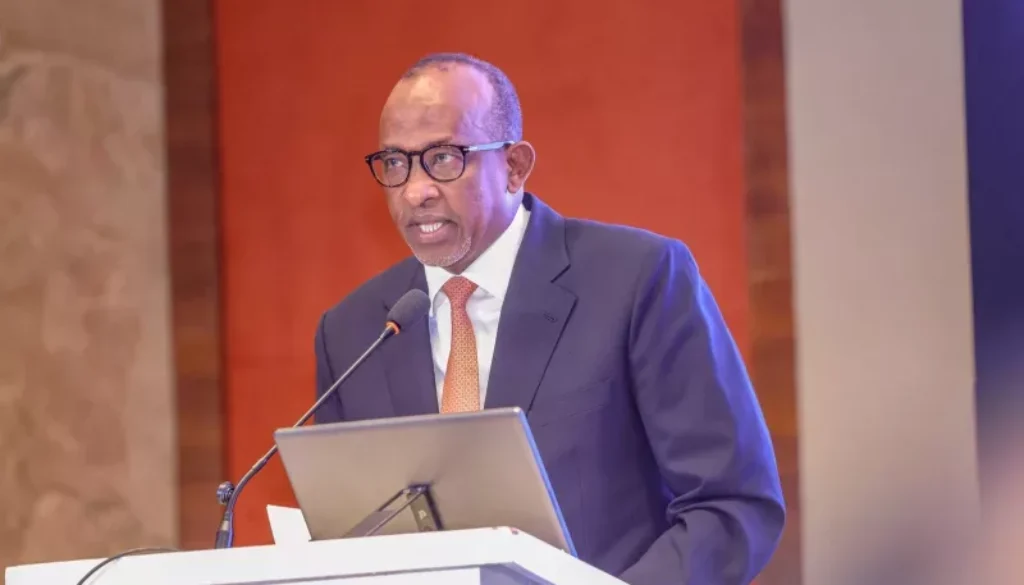
CAPTION: Health CS Aden Duale during a summit on September 28, 2026. /HANDOUT
By Nanct Agutu
NAIROBI – Health Cabinet Secretary Aden Duale has said Kenya does not have an Ebola outbreak, describing the reported case as an imported incident involving a patient who travelled from the Democratic Republic of Congo.
Speaking on NTV’s Fixing the Nation on Wednesday, Duale said the government had put in place preparedness measures since the Ebola outbreak was confirmed in May 2026 by the World Health Organisation and the Africa Centres for Disease Control and Prevention.
“We don’t have an Ebola outbreak in Kenya, what we have is an imported Ebola incident just like what happened in Germany or France,” Duale said.
He said Kenya had not been caught off guard by the Ebola threat, unlike the experience at the beginning of the Covid-19 pandemic.
“Since May of 2026, when the Ebola outbreak was confirmed and announced by both WHO and Africa CDC, we were not caught off guard like COVID,” he said.
According to Duale, the country has screened about 650,000 passengers across its 15 points of entry as part of measures to prevent the virus from spreading into the country.
He added that 4,900 healthcare workers had been trained to handle Ebola cases, while 276 suspected cases had tested negative.
“We have put in place enough preparedness as a country, 650,000 passengers screened across all our 15 entry points, 4,900 healthcare workers trained to deal with Ebola, and 276 cases tested negative,” Duale said.
The CS said the patient who tested positive in Kenya could be traced from his journey from northwestern DRC through several cities and eventually into the country.
“This patient is imported because we can define his pathway, how he came from northwestern Congo, DRC, to Kisangani, Beni, Kinshasa, Kampala and Kenya,” he said.
Duale also suggested that medication the patient was taking while travelling may have affected the ability of thermal scanners at Jomo Kenyatta International Airport to detect him.
“When he came to Kenya he was on medication and must have taken heavy medications that helped him not to be detected at our thermal scanners at JKIA,” he said.
The Health Ministry has maintained that the case is being handled through existing disease surveillance and response mechanisms, with health authorities monitoring contacts and strengthening screening at points of entry.
On Tuesday, the Nairobi Governor Johnson Sakaja assured residents that the county has intensified Ebola preparedness and response measures across all 17 sub-counties following the confirmation of a case in the capital.
Sakaja said Nairobi had strengthened disease surveillance, contact tracing, isolation capacity and emergency response systems to safeguard residents against the threat of an Ebola outbreak.
He said 923 health workers and 1,598 Community Health Promoters (CHPs) had undergone specialised training on the early detection, identification and reporting of suspected Ebola cases, while more than 60 laboratory officers had been trained on safe sample collection and handling.
Speaking during a press briefing on the county’s response, Sakaja said Rapid Response Teams had been activated across the 17 sub-counties, with the county Emergency Operations Centre coordinating surveillance, case reporting, contact tracing and emergency interventions.
“Our message to Nairobi residents is clear: remain alert, remain calm and cooperate with our health teams. There is no need for panic, but we must all take the necessary precautions and report suspected cases early,” Sakaja said.