DR Congo’ ADF rebels evades US Sanctions
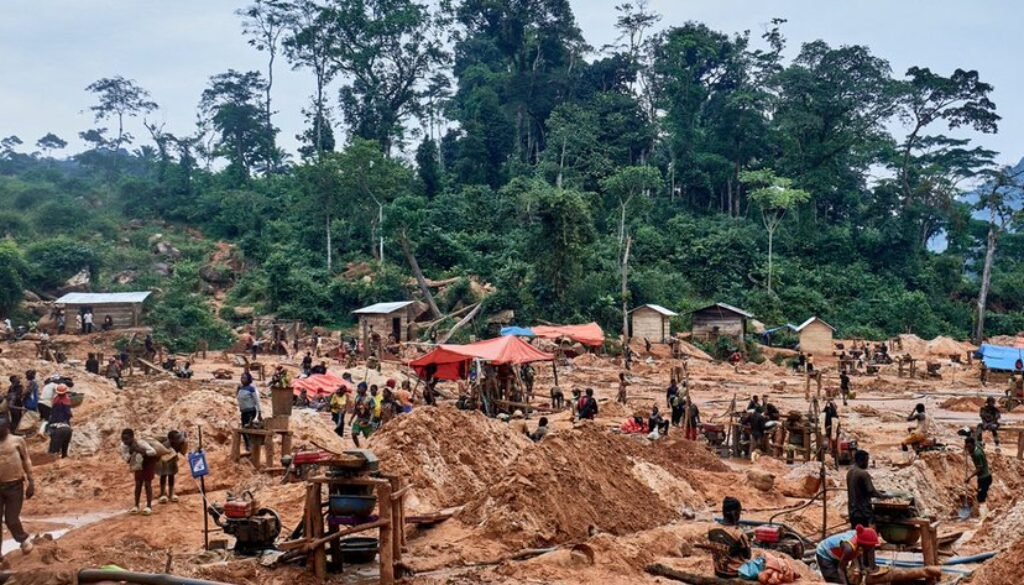
CAPTION: DR Congo locals in a gold mine under the control of ADF rebels recently. (File photo).
By Agency
- US sanctions imposed in July 2024 targeted financial intermediaries linked to Islamic State networks, but the Allied Democratic Forces (ADF) continue to generate revenue through illegal gold trading in eastern DR Congo.
- The Sentry estimates that ADF-linked gold operations generate between $1 million and $1.6 million annually in the Manguredjipa area alone, with some supplies reaching Ugandan refineries.
- DR Congo is expanding state-backed artisanal gold purchases through DRC Gold Trading, which exported 3.5 tonnes in 2025, while The Sentry is calling for further investigations and potential sanctions against international supply chain intermediaries.
In DR Congo, restrictions on foreign financial support have failed to eliminate armed groups’ access to funding. An investigation published by The Sentry on Tuesday, October 27, shows how the Islamic State-affiliated Allied Democratic Forces (ADF) have offset declining external financial support, partly through gold smuggling networks that channel the metal into neighboring Uganda.
The ADF operate separately from the Rwanda-backed M23 rebel movement and the Wazalendo militias allied with the Congolese army. In July 2024, Washington imposed sanctions on three intermediaries linked to Islamic State networks in Africa.
Among them, Abubakar Swalleh allegedly helped transfer funds from South Africa to DR Congo, according to the US Treasury Department. The sanctions include asset freezes under US jurisdiction and restrictions on financial transactions.
However, the ADF have developed alternative revenue streams. In a February 2026 report, the United Nations sanctions monitoring team assessed that the group largely financed its own operations and received limited external funding. The report also highlighted the ADF’s ability to extort money from small local businesses.
The Sentry’s investigation details the group’s involvement in the gold trade. According to the findings, ADF militants control certain mining sites, impose levies on operators and regulate access to mining activities.
In Manguredjipa, North Kivu, at least 30 of the 54 gold buyers still operating in March 2026 knowingly sourced supplies from mines controlled by the ADF and other armed groups, the investigation found.
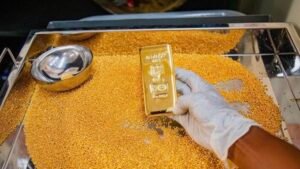
Some of this gold subsequently enters licensed trading houses in Butembo before reaching refineries in Uganda. Based on estimated levy rates, The Sentry calculates that gold-related activities generate between $1 million and $1.6 million annually for the ADF in the Manguredjipa area alone.
Bringing Gold Into the Formal Market
Gold smuggling has broader economic consequences for DR Congo beyond financing extremist groups such as the ADF. The illicit trade also deprives the government of tax revenue, adding to Kinshasa’s longstanding efforts to bring artisanal gold production into formal trading channels.
Following the termination of its partnership with UAE-based Primera Group in 2024, the Congolese government has increasingly relied on DRC Gold Trading, a state-owned company responsible for purchasing and marketing artisanal gold.
The company says it exported 3.5 tonnes of gold in 2025. However, its management identifies two major obstacles to expanding purchases: persistent insecurity in mining areas and insufficient liquidity among partner banks.
To address the financing challenge, DRC Gold Trading signed an agreement in August with the Caisse Générale d’Épargne du Congo to establish banking counters at its facilities. The arrangement aims to facilitate payments to gold traders while improving transaction security.
Meanwhile, the company is expanding its network of purchasing points to reduce the distances miners and traders must travel to sell gold through legal channels.
At the international level, The Sentry is calling for investigations into gold traders, refiners, exporters and financial intermediaries that help move ADF-linked gold into foreign markets.
The organization also recommends considering sanctions against these actors to disrupt the commercial outlets that sustain the group’s financial independence.