Opposition cuts shadow cabinet to thirty
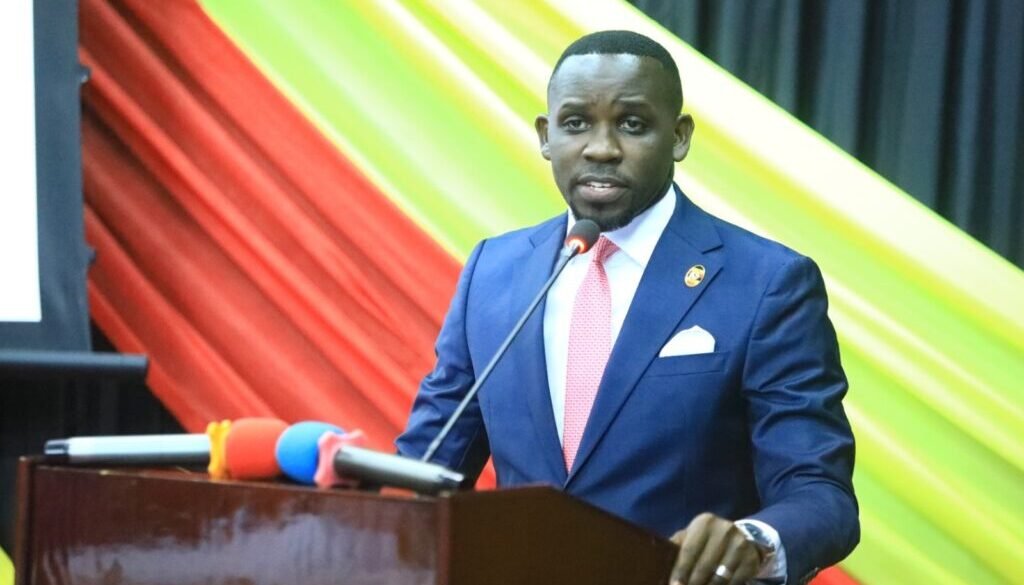
CAPTION: Leader of the Opposition (LoP), Joel Ssenyonyi on te flour of Parliament recently. (Courtesy photo).
By David Basekke
KAMPALA – The unveiling of a 30-member Shadow Cabinet by the Leader of the Opposition (LoP), Joel Ssenyonyi, has ignited a constitutional and political debate that extends far beyond parliamentary procedure. At stake is not merely the composition of an opposition team, but competing visions of governance, public expenditure, executive size, and Parliament’s ability to hold government accountable.
By deliberately reducing the Opposition’s front bench from a structure that could mirror the government’s more than 80 ministerial portfolios to just 30 broad dockets, Ssenyonyi has sought to make a statement: effective oversight, he argues, does not require a bloated bureaucracy.
Presenting the appointments before Parliament, Ssenyonyi maintained that the new arrangement complies with Rule 15(2) of Parliament’s Rules of Procedure, which requires the Leader of the Opposition to appoint a Shadow Cabinet from among opposition Members of Parliament.
“The provision of the law is for us to have workable dockets that will hold government accountable. We would have had 82 shadow ministers, but we said we are going to shrink all those into 30 workable dockets,” Ssenyonyi told the House.
His announcement immediately transformed what might otherwise have been an administrative exercise into a wider policy conversation about the size and efficiency of Uganda’s government.
Traditionally, shadow cabinets are designed to mirror government ministries, enabling opposition legislators to scrutinize specific sectors and offer alternative policy proposals.
In Westminster-style democracies such as the United Kingdom, Canada, Australia and New Zealand, shadow ministers act as government-in-waiting, tracking ministerial performance and presenting alternative approaches.
Uganda’s Opposition has historically followed a similar pattern. However, Ssenyonyi’s restructuring departs from precedent by consolidating several portfolios into broader clusters.
The move comes at a time when public debate over the size and cost of Uganda’s Executive remains intense.
Uganda currently maintains one of the largest executives on the continent, comprising Cabinet ministers, Ministers of State and numerous presidential advisors. Critics have long argued that the expanding executive structure places a significant burden on taxpayers while creating overlapping mandates among ministries and agencies.
By reducing his own team to 30 members, Ssenyonyi appears to be advancing a broader political argument, that government itself could function more efficiently with fewer ministers. “We believe 30 ministers are able to run government effectively,” he said.
The debate speaks directly to Parliament’s constitutional responsibility under Article 79 of the Constitution, which vests legislative authority in Parliament and empowers it to make laws for the peace, order, development and good governance of Uganda.
Equally important is Parliament’s oversight role, exercised through plenary debates, committee investigations, budget scrutiny and ministerial accountability.
Article 90 establishes sectoral committees responsible for monitoring government ministries, departments and agencies, while Article 164 requires accountability for public expenditure.
In this framework, the Shadow Cabinet serves as an informal but influential mechanism for strengthening scrutiny of government decisions.
Political analysts argue that the effectiveness of a Shadow Cabinet should not necessarily be measured by its size but by its ability to generate evidence-based critiques, monitor public spending and propose alternative policies.
The key question therefore is whether fewer shadow ministers handling larger portfolios can provide more effective oversight than a larger team mirroring every government ministry.
The most contentious aspect of the new structure emerged when government ministers challenged the legality of some appointments.
Minister for Health Chris Baryomunsi questioned the appointment of Obongi County MP Kaps Fungaroo as Shadow Minister for Human Rights.
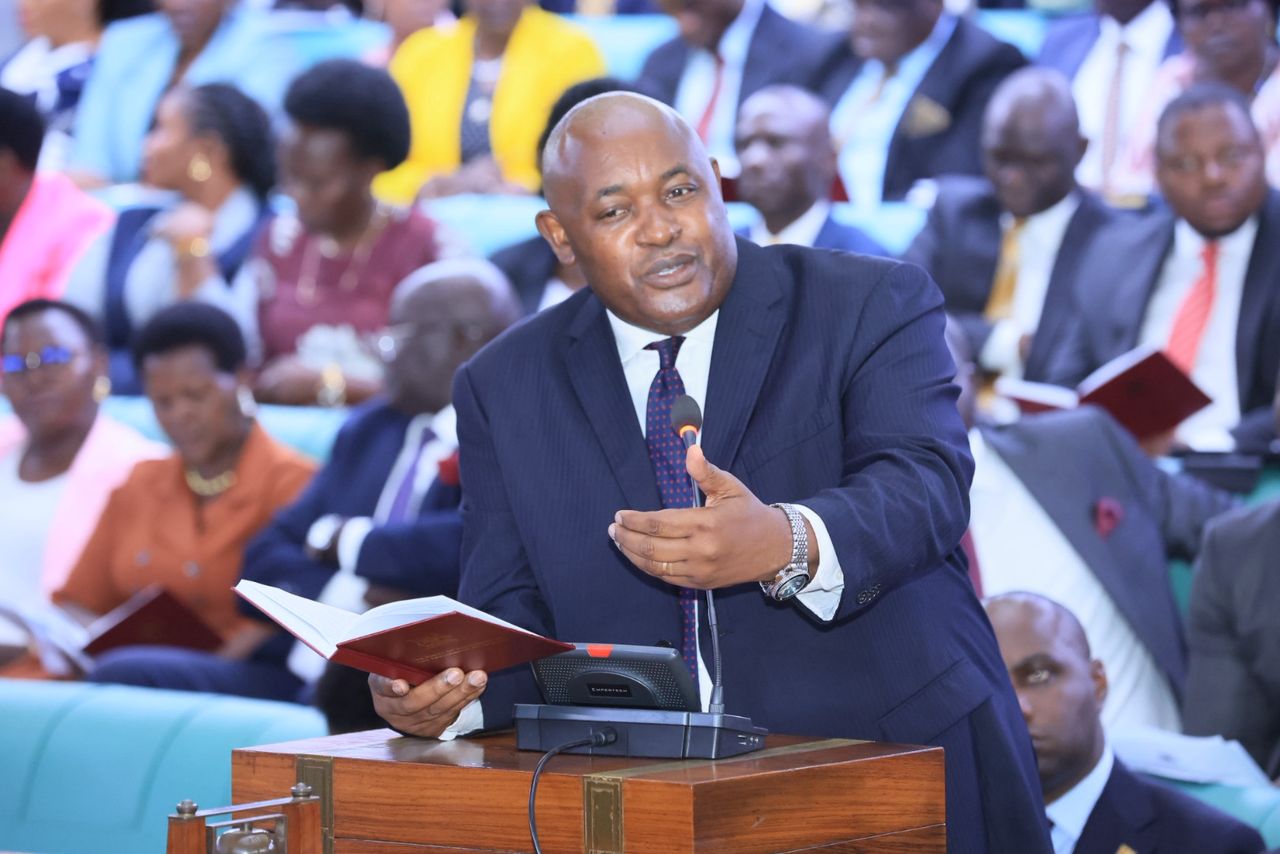
Baryomunsi argued that because there is no standalone Human Rights Minister in Cabinet, the appointment appeared inconsistent with Rule 15(2), which envisages shadow ministers corresponding to existing government portfolios. “If there is no cabinet minister for Human Rights, who is he shadowing?” Baryomunsi asked.
The challenge triggered a broader debate about the purpose of shadow portfolios and whether they must strictly replicate executive positions.
Ssenyonyi defended the appointment vigorously, arguing that the Opposition deliberately elevated human rights oversight because of persistent concerns regarding abuses by state institutions.
According to annual reports by the Uganda Human Rights Commission (UHRC), complaints involving security agencies consistently constitute a significant portion of reported human rights violations. Issues ranging from unlawful detention and torture allegations to restrictions on assembly and expression have repeatedly featured in the Commission’s findings.
Ssenyonyi argued that dedicating a shadow minister to human rights reflects the urgency of those concerns. “The docket of security is where most of the human rights abuses get committed,” he said.
The exchange highlights a growing trend within opposition politics, placing governance, civil liberties and accountability at the centre of parliamentary scrutiny.
The Shadow Cabinet debate arrives amid longstanding criticism of Uganda’s expanding executive. Successive parliamentary reports, civil society organizations and governance experts have questioned whether the growing number of ministers corresponds with improved service delivery.
Research by institutions such as the World Bank and the African Development Bank has frequently emphasized the importance of efficient public administration, warning that larger bureaucracies do not automatically translate into better governance outcomes.
Critics argue that a large executive increases recurrent expenditure through salaries, vehicles, offices, travel allowances and administrative support.
Government officials, however, have historically defended the arrangement, arguing that Uganda’s diverse socio-economic priorities require specialized ministerial attention.
Ssenyonyi’s 30-member model therefore represents more than an Opposition organizational structure; it is an attempt to offer a competing vision of government itself.
The newly unveiled team includes Harriet Nakwede as Deputy Chief Opposition Whip and Shadow Minister for the Presidency, Gonzaga Ssewungu for Defence and Veteran Affairs, Gyaviira Sebina Lubowa for Finance, Planning and Economic Development, Dr Timothy Batuwa for Health, and Luyimbazi Zinna Lukola Elias as Shadow Attorney General.
Their effectiveness will likely be measured not by the titles they hold but by the quality of scrutiny they bring to national issues including public debt, healthcare financing, education outcomes, corruption, security sector accountability and implementation of government programmes.
For researchers and policy analysts, the development presents an opportunity to examine whether streamlined oversight structures can enhance legislative effectiveness.
For government, it signals a potentially more focused Opposition capable of concentrating expertise around key governance concerns.
For Parliament, it raises a deeper institutional question: can accountability be strengthened not through expanding structures but by making them more strategic, coordinated and evidence-driven?
As the 12th Parliament takes shape, Ssenyonyi’s lean Shadow Cabinet has already achieved one objective, it has reignited a national conversation about the relationship between government size, public expenditure and democratic accountability.
Whether the experiment succeeds will ultimately depend on whether the Opposition can translate a smaller team into stronger oversight and more persuasive alternatives to government policy. In a Parliament constitutionally mandated to hold the Executive accountable, that may prove to be the most important test of all.