South Sudan-Uganda Elegu border blockade continuous
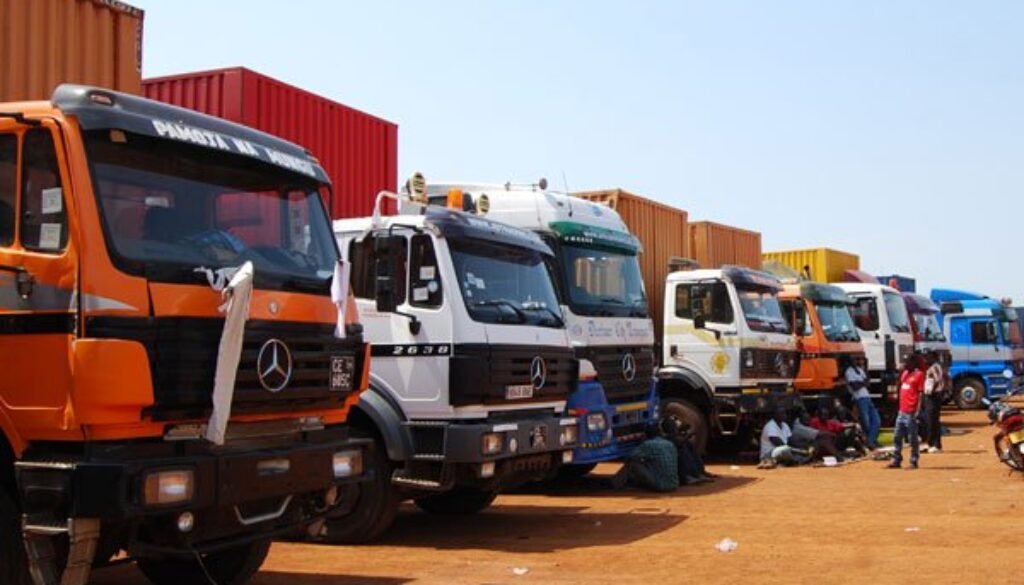
CAPTION: Some of the trucks parked at the Nimule-Elegu entry point on Tuesday 5th, May 2026. (Courtsey Photo).
By Our reporter
NIMULE – The obstruction of the South Sudan-Uganda border at the Nimule-Elegu entry point by drivers from the East African Community (EAC) has entered its ninth day, causing a more than 16-kilometre traffic jam and shortage of basic commodities in Juba and across the country.
The truck drivers parked their vehicles on both sides of the road on the Ugandan side of the border, blocking traffic to and from Uganda and South Sudan.
Isaac Kabataazi, the vice chairperson of truck drivers in Uganda, said they are protesting the violation of their December 2024 agreement between truck drivers, Ugandan, and South Sudanese authorities that stopped erecting illegal roadblocks, collection of illegal fees, harassment, and imposing of taxes that violate the regional protocols.
“We want the South Sudanese authorities to implement the previous agreement we signed with them to ensure that the roads are free of illegal road blocks and also halt new levies,” he said on Friday.
This strike followed the attack on a truck driver after he was stopped at an illegal roadblock by machete-wielding security personnel on the Nimule-Juba highway on 28 April 2026. The driver was pronounced dead at a hospital. Another driver was attacked at the Nimule border town in South Sudan on the same day.
The blockade has caused a shortage of goods, including fuel and food, in many parts of South Sudan at a time when the US-Israel war against Iran has led to a rise in petroleum prices.
Ugandan traders, who export perishable goods, like tomatoes, onions, and watermelons, to South Sudan, are also counting losses. Their commodities are perishing on the trucks.
This is a recurrence of similar incidents that happened in 2024. In 2024, the blockade started on 27 November and continued up to 4 December 2024, when the two parties agreed to settle their differences. The EAC truck drivers, Uganda and South Sudan, reached an agreement in which the Juba government agreed to stop extortion, illegal taxes, and harassment.
They are demanding tax and security reforms in accordance with the East African Community protocols. The EAC truck drivers accuse the South Sudanese authorities of illegal arrest and detention of their colleagues over minor traffic infractions. They say the jailed truck operators are only released after paying bribes to the security personnel.
Some traders also allege that South Sudanese security personnel erect illegal roadblocks where they solicit bribes and demand illegal fees from truck operators because they aren’t paid a salary by their government. The South Sudanese authorities were also accused of imposing heavy fees at the weighbridges.
Katabaazi said the truck drivers have resolved not to drive to South Sudan unless their issues have been settled by the South Sudan government. In December 2024, after the strike, truckers, Ugandan authorities, and South Sudanese officials established a committee to resolve the impasse. The committee signed a memorandum of understanding in which they agreed that all roadblocks between Nimule and Juba City would be removed immediately.
“Suspension of US$70 paid by drivers until the matter is raised to the higher authority; cancellation of all illegal immigration charges; cancellation of whatever amount is being collected by empty manifest from empty crates,” the memorandum read. “Cancellation of all illegal fees being charged by CID; cancellation of SSP90,000 as stamp duty being charged at exit gate; cancellation of illegal charges by fire department; cancellation of all illegal charges at Jebel checkpoint, and cancellation of SSP 20,000 being charged at Nesitu.”
“Cancellation of SSP 20,000 being charged at Juba Bridge; and cancellation of any unlawful charges by any security organ,” the MoU added.
The parties agreed to stop any form of harassment and extortion of drivers along the route.
However, truck drivers accuse the South Sudanese authorities of continuing with the illegal fees, extortion, and harassment despite vowing to eliminate them two years ago.